Introducing TCHO Pro
Login   Help
Free Shipping on orders over $50. Use coupon code: FREESHIP50 at checkout.
frame1 frame2 frame3 frame4 frame5 frame6 frame7 frame8 frame9 frame10

Before there was chocolate,
there was drinking chocolate.

When we set out to create TCHO’s Hot and Cold Drinking Chocolate, we were inspired not by the cloying “hot cocoa” we had as children, but by a desire to create a modern drink that you’d prefer to another boring cup of coffee for your morning inspiration, or to that same old glass of iced tea to quench your thirst on a hot summer day.

To create a modern chocolate drink, we turned, paradoxically, to the past. Long before chocolate was ever molded into a bar, it was, for more than a millennium, a popular drink.


Wouldn't you rather have a TCHOspresso?


It started in Central America
The Olmecs of Central America are credited with discovering chocolate in 600 B.C, at first drinking the milky pulp surrounding the beans. Olmecs ultimately succumbed to the Mayans, who took cacao seriously. They had a cacao god, they associated cacao with blood, it was exchanged by bride and groom, and they even anointed children with cacao water in a kind of baptism. The Mayans cultivated, fermented, dried, ground into paste — and ultimately mixed their chocolate with spices and water, which they drank hot. The Mayans usually sipped their drinking chocolate neat, after dinner.

The Mayans were in turn conquered by the Aztecs. Cacao became a cornerstone of the Aztec economy, with beans the currency of commerce and the prime means of paying soldiers and workers. Unlike their Mayan subjects, the Aztecs drank their chocolate cold — they even thought it was healthful because it cooled down the body, useful in the tropics. The name they gave their concoction: xocolatl — the word for chocolate is derived from drinking chocolate in the first place.

When the Spanish conquistador Cortes subjugated the Aztecs, he discovered that both the lower and upper classes were drinking chocolate. The Spanish, however, found the drink repulsive, even if they continued the practice of using cacao beans as currency. It was only when the Spanish brought sugar from their plantations throughout the Caribbean and combined it with the original Aztec drink did they finally begin to appreciate chocolate — still drinking chocolate.

The rage of Europe
When chocolate reached Europe, it was very expensive and became the drink of the elite, an exotic luxury for those in the know, and which required special processes, paraphernalia, and added ingredients, like vanilla, to enjoy. By the seventeenth century, drinking chocolate had swept Europe, partially for its healthful benefits, partially for its snob appeal, but also because it was the first the first caffeinated beverage, arriving before tea and coffee. The stimulating qualities of cacao were thought to improve stamina in both battle and love.

For more than a century, drinking chocolate was the only chocolate in Europe, from Louis XIV’s court in Versaille to the salons of Cosimo de Medici, who was noted for his jasmine chocolate. It wasn’t until 1828 when the Dutchman Conrad van Houten developed a way to extract cocoa fat from cocoa mass that people actually ate chocolate instead of drinking it. Another van Houten invention, treating the chocolate with alkaline, was the final step in making eating chocolate cheap and popular.

But Europeans continued to drink chocolate in cafes, alongside coffee and tea. Indeed, in the 1850s, Cavour and Garibaldi met in a little chocolate café in Torino called Bicerin in the shadow the Palace of the Duke of Savoy, to plot, over little cups of thick drinking chocolate, the Risorgimento, which unified Italy. Europeans still drink chocolate in cafés, from Spain to Paris to Torino, where Bicerin is still serving drinking chocolate to this day.

A tradition made modern
It is in the spirit of that tradition that TCHO decided to develop its drinking chocolate. Nine months in joint development by TCHO’s Chief Chocolate Officer and a noted drinks maker who prefers to remain nameless, TCHO’s Drinking chocolate is as serious as the little cups of demitasse that fueled Cavour and Garibaldi’s passion, or that quenched the thirsts of Aztec nobles or Fiorentini in Medici’s court.

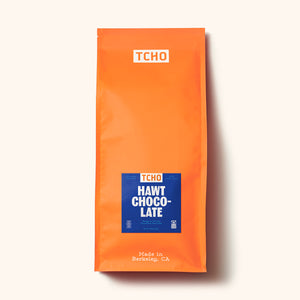
TCHO drinking chocolate is a precise blend of three of TCHO's chocolates — “Chocolatey” from Ghana, “Citrus” from Madagascar, and “Nutty” from Peru — and no added spices or ingredients. It is, as our phantom drinks maker put it, “Pure chocolate deliciousness.”

To make a TCHOspresso, pour heated water over the dark chocolate crumbles in a demitasse cup, causing it to melt. A vigorous stirring creates a stimulation drink with a frothy, melted texture and intense deep chocolate flavor that coats your mouth with goodness. Or try a TCHOlatte, mixing frothy milk and the chocolate granules. You can also add your favorite coffee — at TCHO’s Beta Store it’s Blue Bottle — for a TCHOmocha. Or make up a pitcher, refrigerate it, then serve it over ice for the ultimate summer thirst quencher.

TCHO drinking chocolate
BUY
“The Mayans usually sipped their drinking chocolate neat, after dinner.”
“By the seventeenth century, drinking chocolate had swept Europe, partially for its healthful benefits, partially for its snob appeal, but also because it was the first caffeinated beverage, arriving before tea and coffee. ”
“TCHO’s Drinking chocolate is as serious as the little cups of demitasse that fueled Cavour and Garibaldi’s passion, or that quenched the thirsts of Aztec nobles or Fiorentini in Medici’s court.”


We really get into our work.